Sinikka's snippets

Finland and travelling, a woman's life, cultures, languages, photography plus family recipes


Leave a comment

The Swedes just do it better

Summer holiday is a good time to check out all the new (and old favourite) cafés in town. Lunch restaurant Hus Lindman has opened a café on the other side of the street.

FIKA café (Piispankatu 14) www.fika.fi (website still under construction!)

IMG_7258

‘Fika’ is a very important concept in Sweden. You can’t even translate the word into other languages. It means having convivial quality time with others over a cup of coffee and some delicious sweet cakes or buns, or possibly sandwiches. For Swedes ‘fika’ is an essential part of socialising and enjoying the good things in life together, and I guess it’s the same for Finland’s Swedish-speaking population.

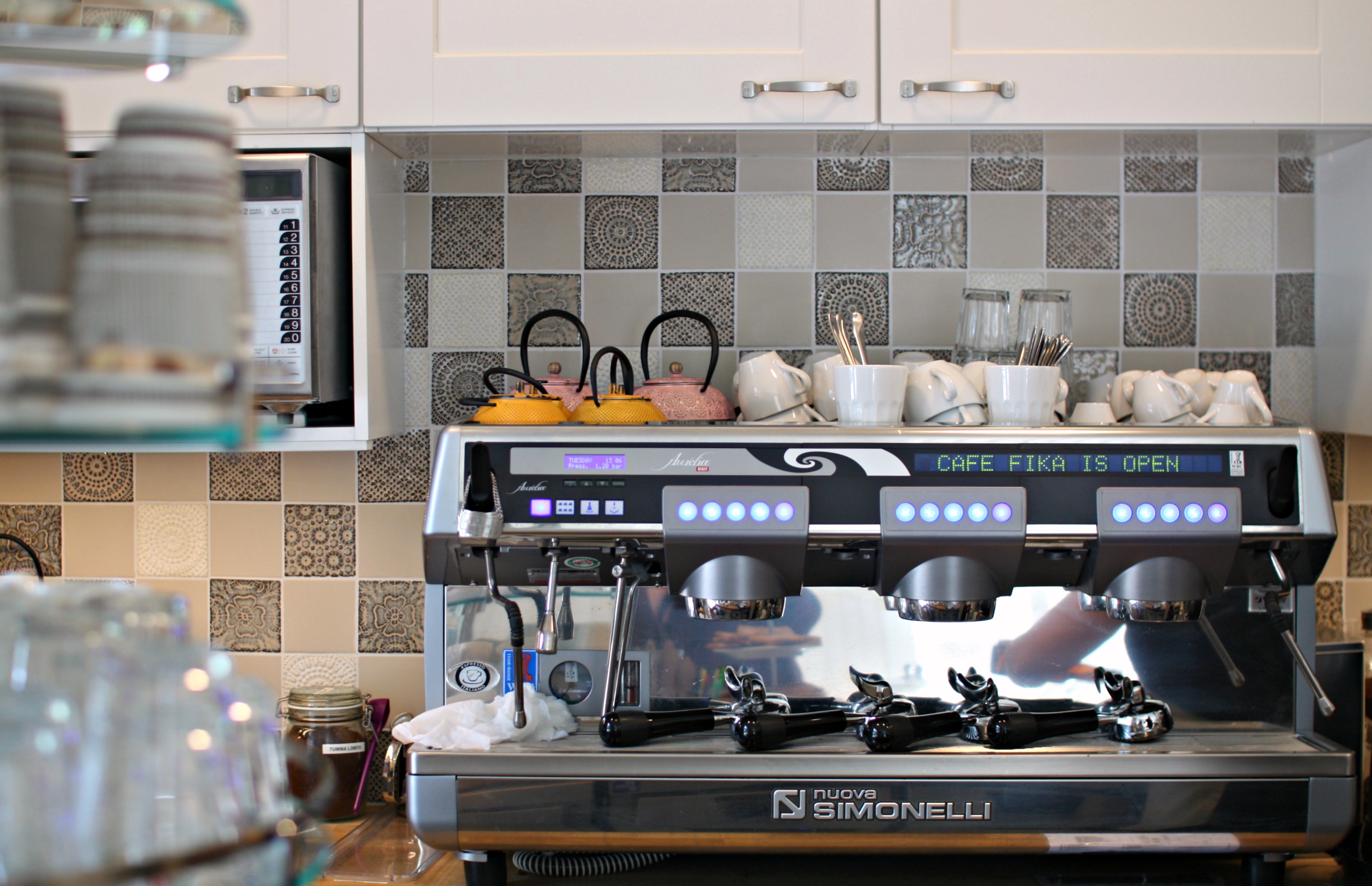
The new FIKA café is an excellent place to get acquainted with this Swedish tradition. The cute little yellow house in the historical “Bishop’s street” right behind the Cathedral serves excellent coffee and tea with a wide variety of goods, all baked and prepared on the premises. A lot of attention is paid to quality and taste, and there is always something new and tempting on offer. In June you could get a refreshing cold summer drink mixed with home-made rhubarb juice and Rooibos tea. It was heavenly! And if you felt adventurous, you could even have some vodka in it.

IMG_7242 IMG_7235 IMG_7237

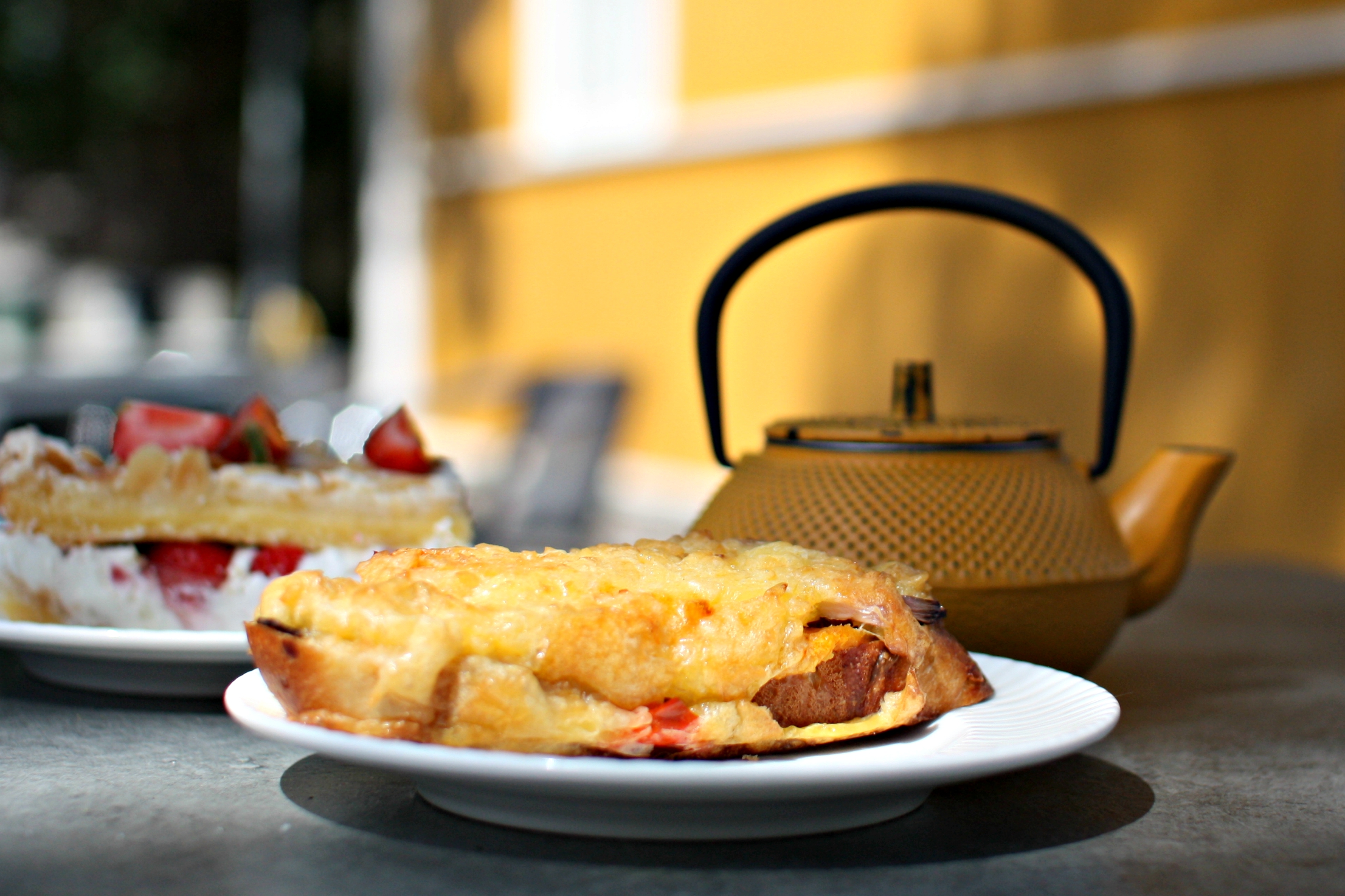
What I especially appreciate is having old traditional Finnish recipes on offer, such as the simple and delicious Brita summer cake I devoured there today. Any type of special coffees are served but I usually go for the very good value presso coffee and cake offer. You get 2 definitely fresh cups of coffee out of the small glass presso pot.

IMG_7253

It is quite a luxury to get proper brewed tea instead of the eternal tea bags here in Finland. I just love Fika’s little tea pots. Another recommendation – the warm hummus open sandwiches are to die for! I am still to try their soup and salad lunches one day.

IMG_7244

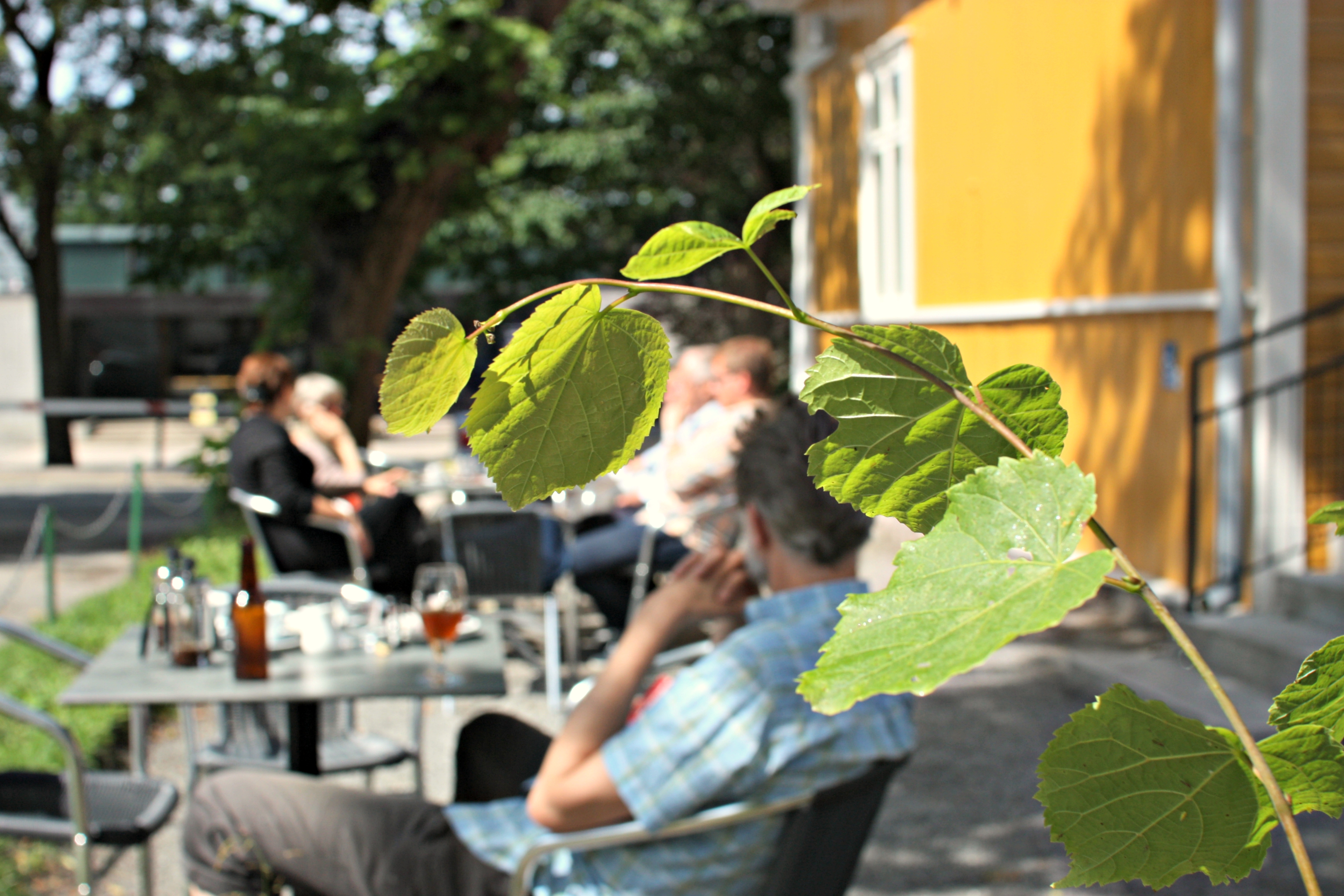
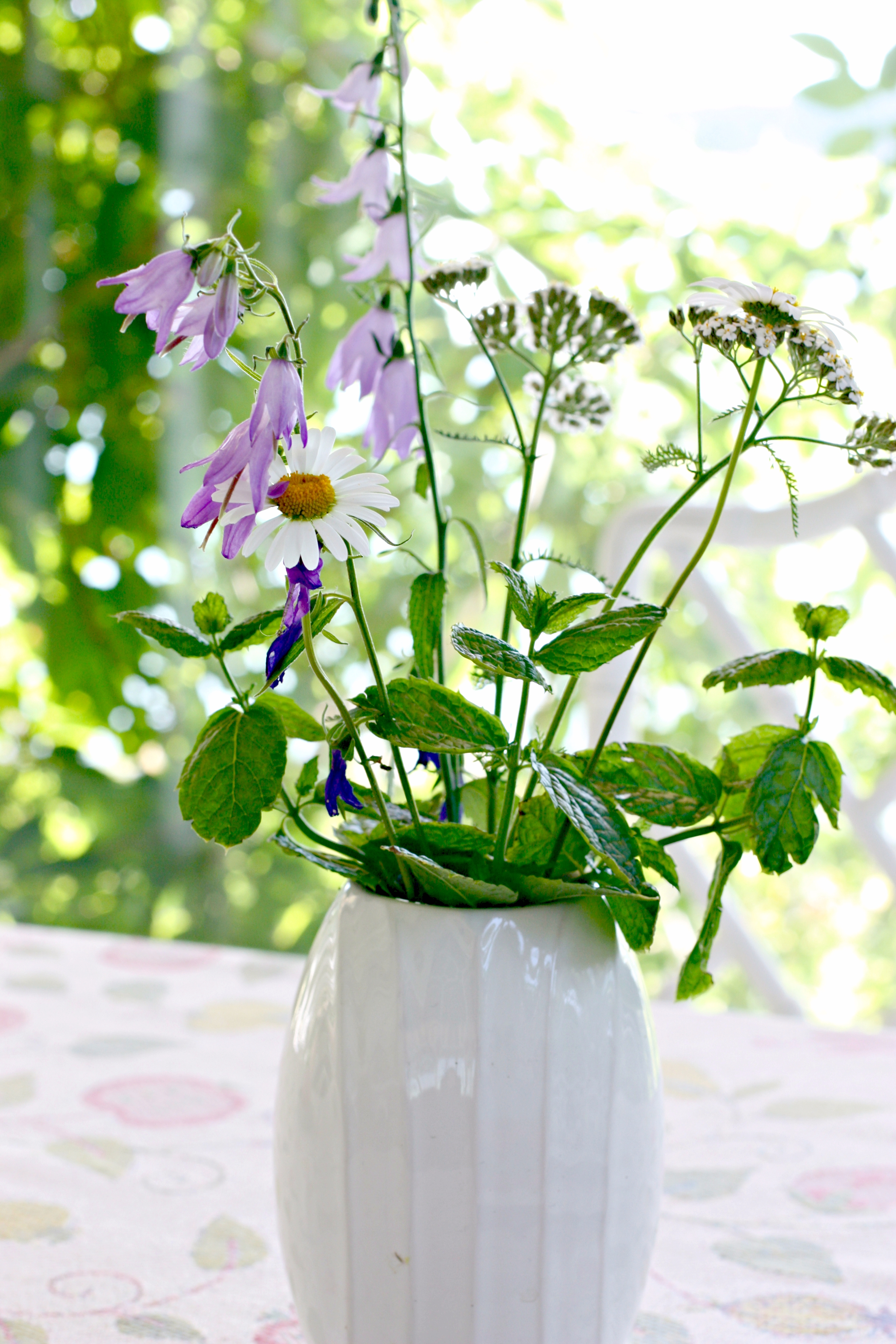
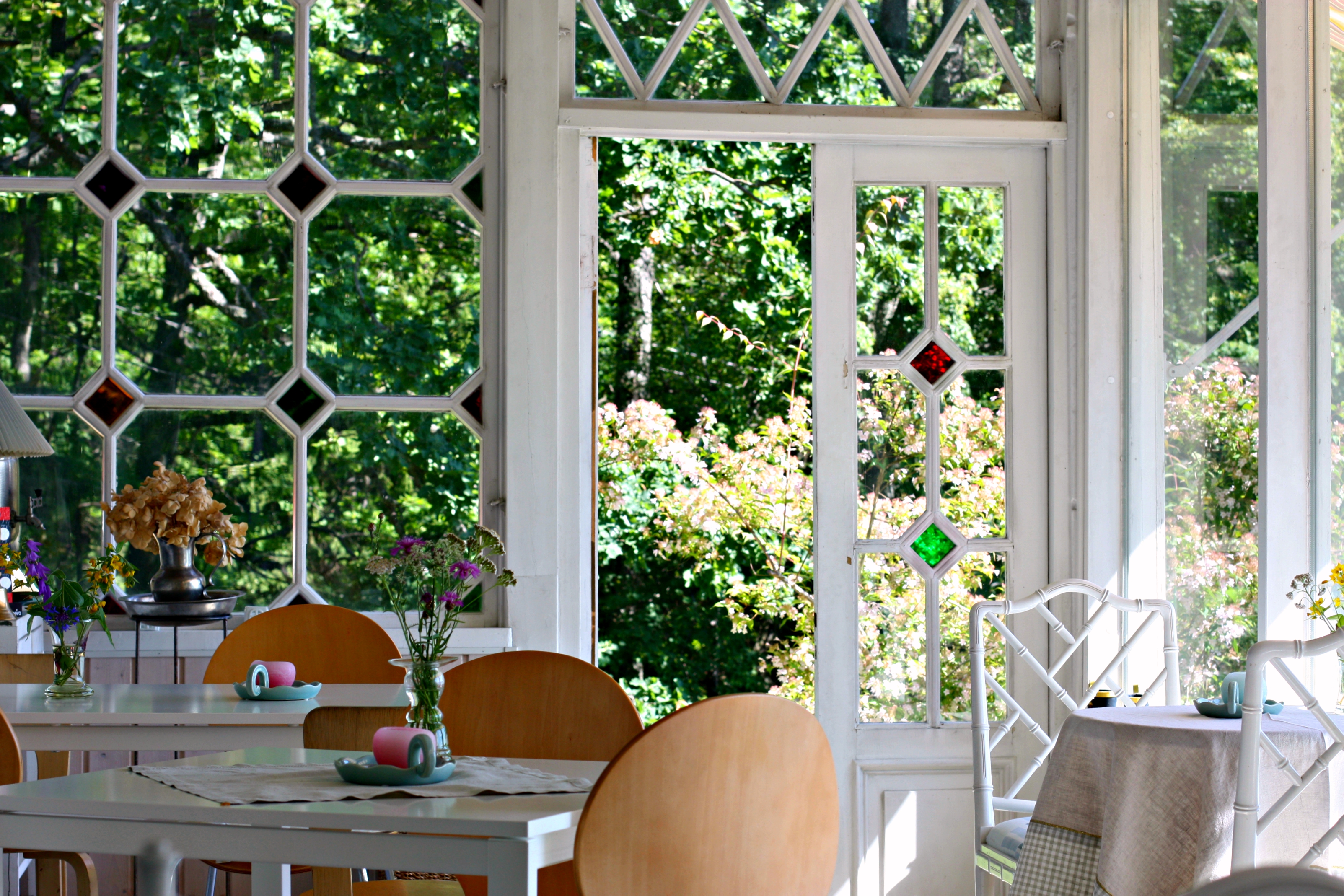
The café is sparsely furnished, and coloured in calm and muted tones in typical Scandinavian style, all crisp and clean. The outside tables are popular on nice days. What is it that makes coffee and tea taste even better outdoors? You are always welcomed with a smile, and service is excellent and super friendly. Without a doubt Fika is my number one café this summer. Definitely worth a visit!

IMG_7256IMG_7255IMG_7234


Leave a comment

Coffee by the sea

Anyone visiting Turku, the old capital of Finland, in summer should spend some time on Ruissalo island, our recreational hiking, swimming, nature admiring oasis. Whether by bus (line 8 from the market square in the centre of town), car, cycling or walking, it’s always a delight but especially so on warm, sunny summer days.

IMG_7232

Quite a few cafés can be found in various locations, and the latest addition this summer is:

Villa Kuuva (Kuuvantie 198, Turku, Finland)

IMG_7162

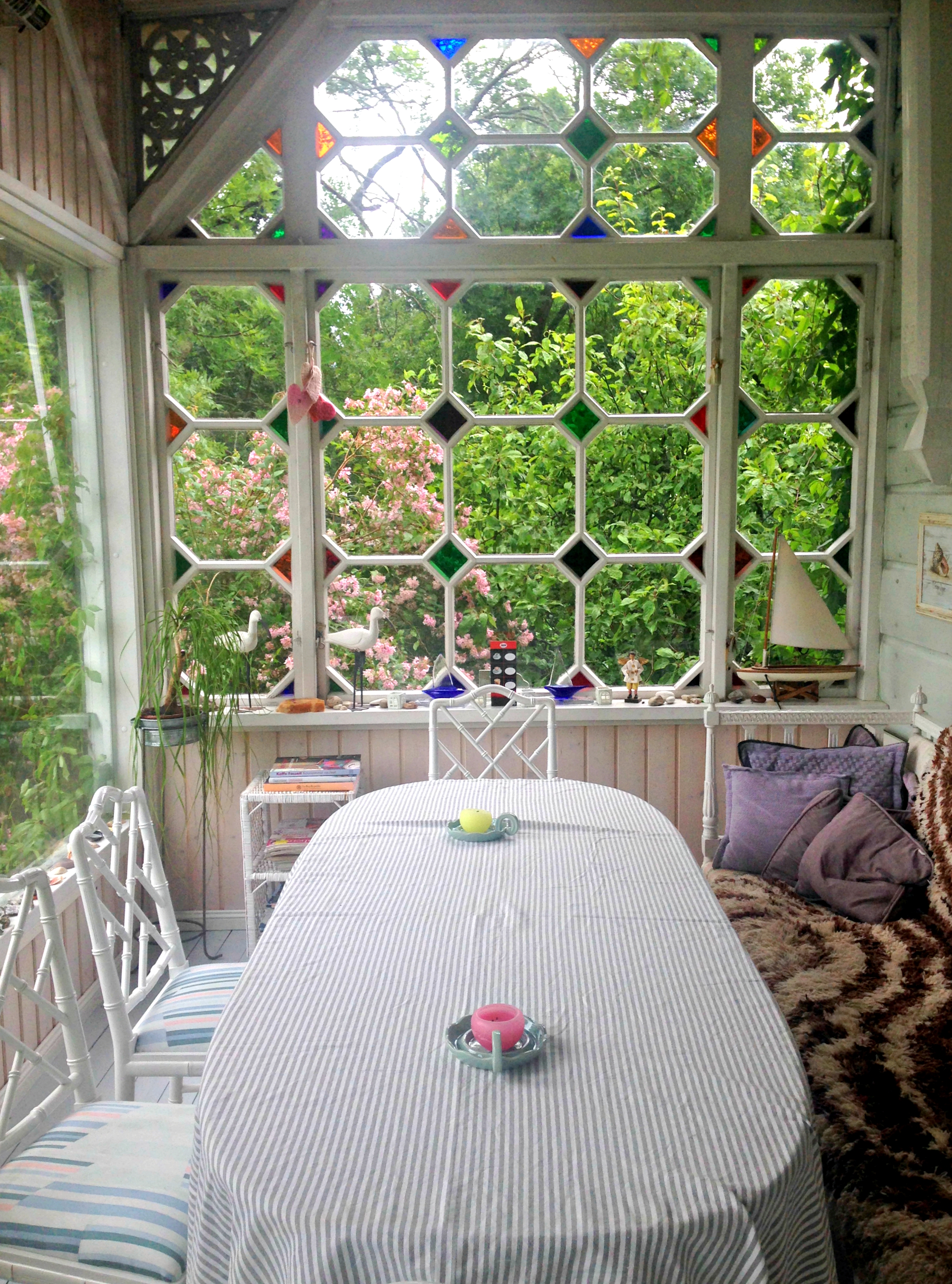
Ruissalo island is famous for its wooden “lace villas”, so-called for their special latticed balconies and windows. These villas were built in the 19th century to serve as summer houses for wealthy merchant families. Most of them have changed owners many times, and in recent years, some have been converted into B&B’s or cafés.

Villa Kuuva is wonderfully located right by the sea, with a luscious garden all around it. I can imagine it being lovely any time of the year. There are apple trees, which must be gorgeous in spring, while lots of summer flowers bring colour and an enticing scent in July. Come autumn, and I’m sure the various deciduous trees will bring a different, vibrant colouring. What a place for all the seasons!

IMG_7231IMG_7228 IMG_7171

And indeed, I read that the owners are planning to have seasonal events around the year, including live fires and Christmas trees for the end of the year festivities.  At the moment, the café is open during the summer season, later on in the year possibly only at weekends. But it is also available for private functions any time.

You should definitely go and experience the unique ambience of this bright yellow villa. Sitting inside is quite intimate, as if you were a guest in a friend’s house. The decor and all the little knick-knacks make it homely and cosy. A lot of the things are sea-related as you would expect in an island summer house.

IMG_7215 IMG_7201 IMG_7173IMG_7180

Not to mention the views! Take in the intensely green summer scenery through the veranda windows, or go and have your coffee outside and breathe the fresh sea air, while different motor vessels and sailing boats glide past on the glittering waves of the Baltic Sea. Archipelago summer couldn’t feel much better!

IMG_3264IMG_7158

Where Villa Kuuva comes short, in my opinion, is the rather unadventurous menu. The salads, quiches and wraps are very ordinary – something I would easily prepare at home. Not even any of the cakes or cookies stood out, unfortunately. Mind you, it’s early days, and I’m hoping they will come up with new, unusual ideas in the kitchen! For the time being, though, I’m happy to pay the 2€ for a cup of coffee just for the privilege of being a guest in this lovely place.

IMG_7181


Leave a comment

‘On the road’ through culture shock

On Instagram, people post pictures on Thursdays with the hashtag #tbt, meaning ‘throw-back Thursday. As it’s Thursday today, instead of instagramming, I decided to post this close to 20-year-old memoir of my family’s unforgettable experience in the US here on my blog. I wrote this in 2002, having done the Fulbright teacher exchange in 1996-1997. All the sentiments and insights still ring very true today.

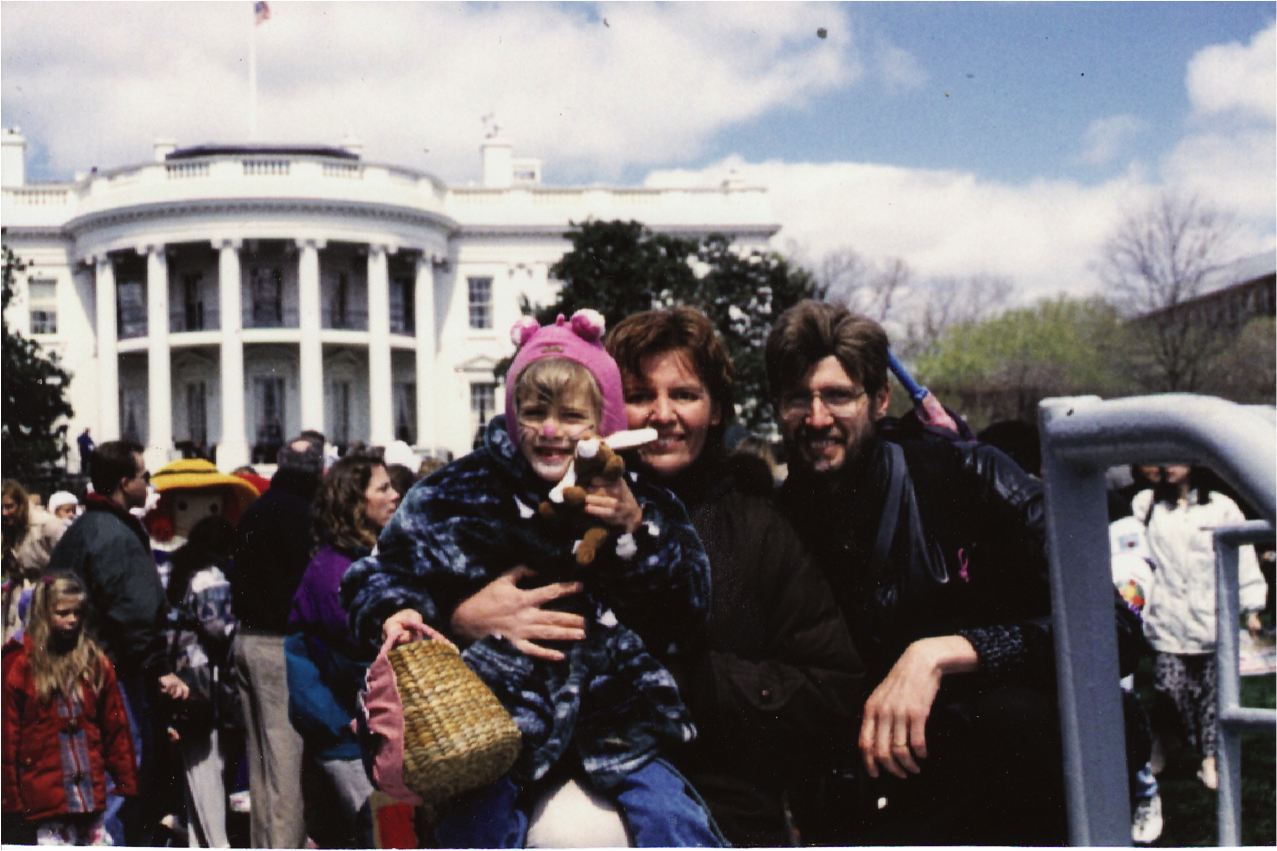
Back in those days, no knowledge of digital cameras, and as all our old-fashioned slide pictures are still waiting to be digitalised, after all these years – only one scanned print of us. Here we are, young and wild, at the White House for the annual kids’ Easter Egg Hunt. It was the Clinton era, and the President and the First Lady even came on the balcony to greet us.

fulbright


ONE FAMILY’S JOURNEY THROUGH AN AMERICAN FULBRIGHT EXCHANGE YEAR

Culture shock has been defined as ”the anxiety that results from losing all of our familiar signs and symbols of social intercourse” (Kalvero Oberg, “Cultural Shock: Adjustment to New Cultural Environment,” Practical Anthropology 7 (1960): 177.) As such, people setting off for any length of foreign sojourn are usually well counselled to deal with this challenge as easily as possible. As indeed, were my family and I.

We learnt all about the four basic stages: euphoria, hostility, gradual adjustment and finally – hopefully – adaptation. We thought we would have been well prepared and aware to avoid it, or at least be able to smoothly survive and get through any of the difficult stages…

Here are some brief thoughts on our year in America.

STAGE 1: EUPHORIA

August 1996 – excitedly off the plane, to set foot on American soil for the first time ever in our lives and into dazzling, sticky-hot Virginia sunshine. Amidst all the immediate ”oohs” and ”aahs” and ”gees”, we enthusiastically started our year of exploration of a vast new continent.

Daily we came across phenomena so new and exhilarating: the sound of, what we thought were noisy telephone lines, but were told bemusedly later were cicadas, the incredibly abundant choice and supply of food at restaurants, the enthusiastic service everywhere (“Have a nice day!”), all those cute American expressions, never-ending TV entertainment, the ultimate ‘shop till you drop’ experiences (I still remember the first time at the cash register: ”Paper or plastic?” and me frantically wondering whether it meant ”cash or credit card”!), the first time driving on the buzzing beltway around DC with the car radio blasting genuine country ‘n western…

And yet, at other times so strangely familiar – after all, we’d seen much of it in the movies or on TV. But it is true what we were told – everything in America is BIGGER, and even then, I’d say magnified by thousands! From such mundane things as the fridge and the garbage can to stretch limos, everything seemed giant (even our new local supermarket was aptly called “Giant”, can you believe it?). Once driving in from New Jersey, catching the first glimpse of that stunning Manhattan skyline – well, even the blue sky seemed huger.

Diary entry during the first couple of weeks: ”Even the ants here are humonguous!”

STAGE 2: HOSTILITY

Soon though, the little hitches began to appear in our consumer and tourist paradise.

For example, little did we guess that all our laboriously acquired medical certificates and child’s extra vaccinations meant diddly-squat in our new home country. Apparently, it was a pink form they needed (not the light blue one our Finnish doctor had provided). Another slight problem – you can’t enrol a child into school if her birth certificate doesn’t have a number and worse, doesn’t list her father’s name, let alone even the child’s!

Once that was all figured out, there was another line up around all different administrative offices in DC to straighten out a problem that, unknown to us, happened immediately we had arrived at the airport. The immigration official there had automatically assumed that the man would be the provider and the wife a mere dependant, and so, naturally, entered MY work permit in my husband’s passport. This now meant I didn’t have a social security number. As I later found out from my students, having this is the key to living the American life. Nothing can really start without it. I tell you, standing in line in an INS office in DC and eventually ending up at the ”deportation booth” is no fun!

Added to all this frustrating red tape, next the stress of actually starting a brand new style of work! My assignment in Falls Church Transitional ESL Center and my job in Finland were literally as different as day and night. Not only did I change from a regular day school into an evening program, for a teacher used to a national curriculum and set course books, it was a shock to end up being more like a freelance entertainer. Instead of having some time every day to team-plan with colleagues, I was literally locked into my classroom with my students for almost six full hours every night. Seeking help from my new colleagues in lost and lonely moments, I was told “just smile” and later hushed with ”we don’t talk shop during dinner breaks”.

Little by little, American peculiarities began to be less charming and started to irritate!

Even the cheerful greetings in shops – “How ya doin, you guys!” – soon sounded downright intrusive. ”Leave me alone, I don’t know you, please don’t say anything to me!!” Now why, oh why, wasn’t America more like good old silent and sensible Finland?! Even our little kindergartener daughter started to show symptoms. During the daily ’Pledge of Allegiance’ with the customary singing of ’God bless America’, she chose not to stand up with the reasoning “but it’s not my flag nor my country, teacher”.

Rock bottom came just two months in: the brakes in our borrowed car let us down one morning and resulted in a brush with law enforcement! What we saw as a really minor bump – just a common beltway fender bender – led to us naively using our European instinct to explain things to try and sort it out. WRONG!! Soon after we were advised: never admit anything, say nothing! We were just totally oblivious to the litigious US approach to any problem.

Already, it was all beginning to suck!

Diary entry: ”Love it, or leave it… Help, I want to go home!”

STAGE 3: GRADUAL ADJUSTMENT

If it wasn’t for our lifeline network of wonderful Fulbright friends we’d made at the orientation (Hilkka, Terttu, Ismo and Anikka – thanks a whole bunch to all of you!) and especially Anneli, our dedicated motherly confidante at the Helsinki end, plus our own stubborn perseverance, we might have easily packed our bags there and then.

But we had our mission to accomplish – to complete the Fulbright assignment and exchange philosophy bestowed on us.

Settling in at work and interacting with my multicultural immigrant students steadily became more of a daily delight and an inexhaustible learning experience for me. Through discussions inspired by poetry, song lyrics, folktales, and legends, I learned such touching details about their lives, feelings, hopes, and fears. In fact, I began to realise that really we were rather like allies and friends, together adjusting to our new environment and gaining invaluable insights into diversity and tolerance and each other’s fascinating cultures.

Further, juggling the roles of a teacher in a challenging new job, being the wife of a Mr. Mom (or as he preferred to call himself, ”Survival Organiser” – to impress Americans incredulous at a man staying at home!), plus a parent of a just turned 6-year-old ”exchange student”, gradually got easier. We began to meet real neat people, routines were established, and we learned the ways to make life run smoothly (coupons really stretch a budget!). Even our daughter’s regular ”OH MANNN!” exclamations, started to sound cute, and reassuring.

America was beginning to reveal to us its fun side.

Diary entry: “Trick or Treat, Thanksgiving turkey and Happy Holidays! Yeah, we’re getting a handle on this now!”

STAGE 4: ADAPTATION

America really is the ideal continent for travel and discovery.

The on the road culture of the States became so understandable. We decided the only way we could handle this was to “collect states”, and so we embarked on the road movie experience by travelling the 3,000 miles from Coast to Coast (and then back) plus a few more North and South. Well, we got to 40 states (out of 50! – that ain’t bad in a year!). Memorable experiences? Wow, countless.

Just a few of the amazing? Here goes… As well as all those famous places in New York … Grand Canyon (one day hike into, and still only got one third down!), desert to snow in one day (those Monuments and Arches up to the Rocky Mountains), San Francisco (Golden Gate Bridge – walked across 3 times), Graceland (plus Tupelo for the birthplace – ah huhhah), Las Vegas (no big bucks for us!), Route 66 (for the kicks!), Hollywood, Miami Beach, Disneyland, Niagara Falls, Kitty Hawk, Indian reservations, Amish folk, nearly everything in DC, like the White House (even the kiddies’ Easter egg hunt on the lawn!), and more…so much more…and all through it the ubiquitous motel stay (or even a tepee, one time).

To top that all we even got the year of a Presidential election. Wow indeed.

Diary entry: ”Been there, done that!”

REFLECTIONS

Only with hindsight did we realise that not only had we not avoided it, but surprise, surprise we had actually been a textbook example of going through all the stages of culture shock.

So, is there any lesson here? Well, perhaps that no matter how well you prepare yourself and are prepared by others for ‘culture shock’, in reality there’s no avoiding it. Everybody just HAS to go through it personally, in their own individual way – it’s like any initiation ritual in life, one way or another you have to work your way through them.

I don’t think you can fully adapt to a new culture in just one year. Despite all our daily triumphs we still remained legal aliens, although possibly well functioning ones. And anyway, for us, the purpose was different. Interaction and enriching our lives through mutual learning and experience were more important. I must admit we left America wistfully. Just as we felt we’d got the hang of Stateside living and culture…it was all too soon suddenly finished. We sure would have loved to stay on for another year.

And no sooner had we arrived back in Finland than it was time for ”re-entry shock”, and that in itself is a whole new ballgame……

It is now close to 5 years since we returned.

The spirit of Senator Fulbright’s original inspiration was: ”promoting understanding between people and their cultures”. In this respect, for us the whole time was totally successful and deeply affecting. After all, put a Finn to teach English to Asians and Hispanics in the US, and you can hardly get closer to that ideal!. Any problems or difficulties we ever encountered pale alongside our experiences and recollections, which are all still so vivid and truly treasured; not only the sights, but also the few lasting and dear friends we met.

But of course, the experience also significantly impacted our professional lives. It became a catalyst that ignited unexpected shifts in our mindsets. In particular, the characteristic and inspirational American ‘can-do’ attitude really got to us. Since then, I have stepped onto the lifelong road to study and learn about intercultural communication and have also become the coordinator of several international projects in my school. My husband also finally got around to setting up his own company on return (based very much on intercultural experiences, too). Even for our daughter, interest in other lifestyles has led to her now having her own sponsored little god-daughter in India.

To wrap then: as well as allowing us to realise the American experience of travelling on the road, the Fulbright exchange and opportunity also set us on the road to become more enlightened citizens of the world. Quite simply, we feel privileged to have been part of Senator Fulbright’s vision.

Diary entry: ”Was it worth it? You betcha – it undoubtedly was REAL COOL MAN!”


Leave a comment

I’d prefer some service, please!

Why is it that departures on major journeys almost invariably occur in the middle of the night? As thrilling as travelling to exciting places as, having the taxi drive at your door at 2.30am is less thrilling. Then, in my case, usually a a coach ride of 2.5 hours to Helsinki airport. To cut a long story short, arriving at the airport, after dosing off on a chilly coach, doesn’t make me a happy camper.

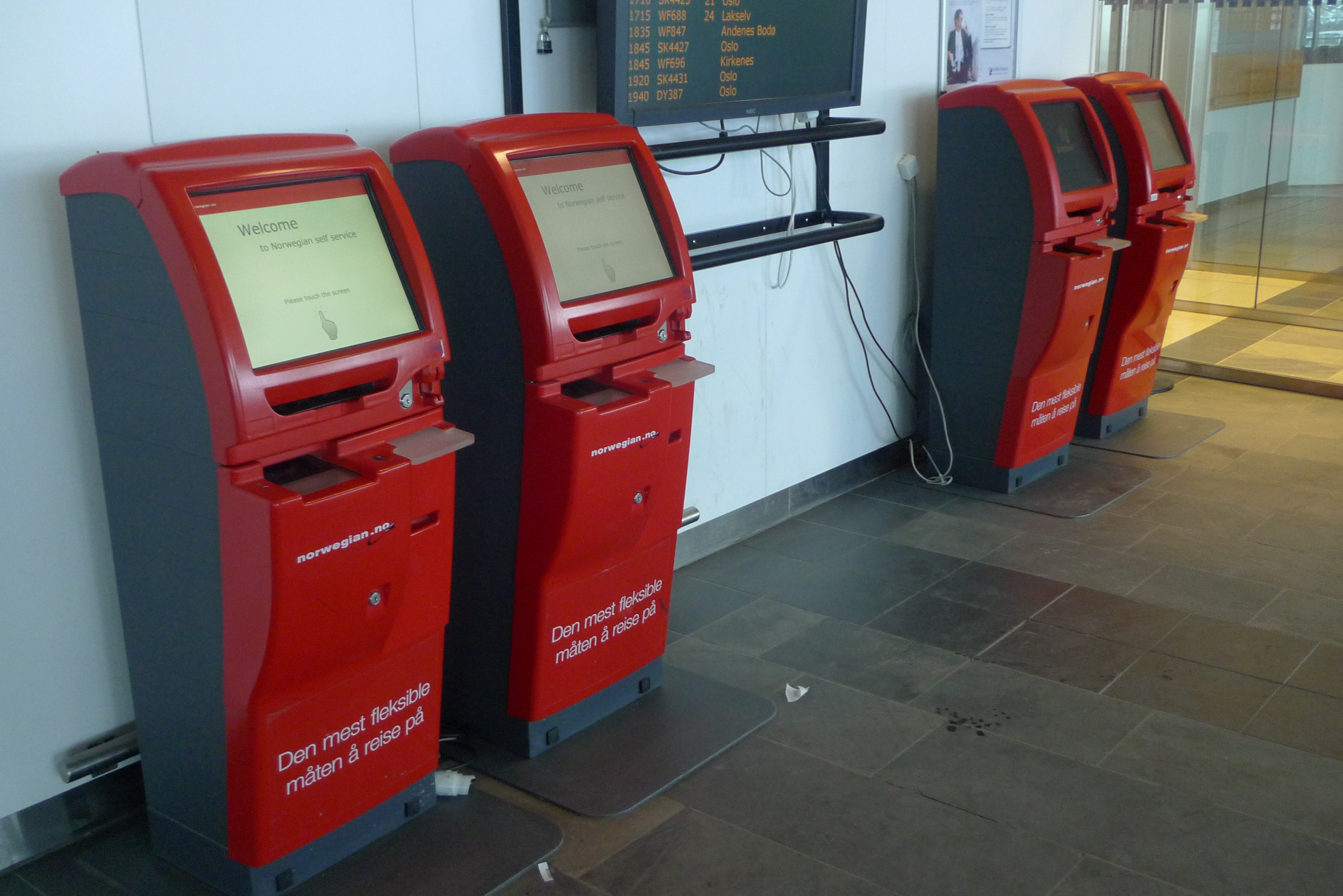
And then, you are forced to do the check-in yourself at a self-service automat! Everybody seems to have some problem with it, and the young assistants there just don’t have enough time to help all passengers quickly and efficiently, no matter how hard they try. Somebody has their boarding passes crumpled and stuck inside the machine, while others are struggling to get all the information of their final address typed in correctly.

The robot-like check-in assistants at Tromsø airport in Norway

The robot-like check-in assistants at Tromsø airport in Norway

Travelling to Hawaii recently, and wrestling with the wretched automat, I could feel my blood pressure rising, and my mood getting lousier by the minute. What finally broke this camel’s back was that there was no way to proceed if you didn’t know the zip code of your address in the US! I didn’t have the zip code! The unfairness of the situation and customer neglect was palpable, in my fuming mind at least. How could airlines do this – reduce staff, to make more profits to the owners and share-holders?

Finally, after trial and error, lots of sweat and frustration, and even being reprimanded by the assistant for using foul language in front of child passengers (!), I got our boarding passes printed. Phew, after all that you’d expect the baggage drop to go nice and smooth. Fat chance! There was a long, slow queue in front of us, and it turned out we had to still see a flight attendant at the check-in desk, to get our bags tagged and ready to go. In the end, it took more or less as long for the attendant to do this, as it would have done to print the boarding passes at the same time. And doing that, how much happier would customers be with the check-in experience, and the general performance of the airline!

Self-service seems to be the norm at Scandinavian airports now. I wonder how foreign tourists to Finland, for example, feel about this inhospitable lack of service at Helsinki airport. I would imagine, it doesn’t promote a very positive country image, does it? What a pity, it’s only money that seems to rule in this part of the world these days. Or maybe I’m just getting more miserable with age, and the younger generation of self-contained globe trotters find nothing strange about this.

How pleasantly different our flying experience was coming back from Asia at the beginning of this summer. I and hubby flew back from Hong Kong, again early in the morning. No shortage of staff anywhere! In fact, I particularly noticed people proudly wearing vests with ‘trolley assistant’ printed on the back. (Needless to say that at Helsinki airport you are lucky to find a trolley anywhere, and usually have to walk quite a while to spot one.)

P1090867

What’s more, instead of the cold, uncompromising machines, we had real people with friendly smiles doing the check-in for us. And to help us avoid queuing even for a while, we were swiftly directed to the priority check-in, even without any priority tickets. Finally, the real icing on the cake was that the efficient VIP assistant managed to secure my long-legged, tall hubby extra legroom for the long-haul flight to Europe. How awesome is that!

P1090865


Leave a comment

Finnish shortbread teaspoon bites

Spring, especially May, and early summer are festive periods in Finland. May starts with a big carnival on the 1st of the month, then there is Mothers’ Day on the second Sunday, and May ends with the biggest national school celebration, upper secondary (or senior high) school graduation. This is also a popular time for weddings, with nature awakening and the famous white nights. In short, there is lots to celebrate.

IMG_4867

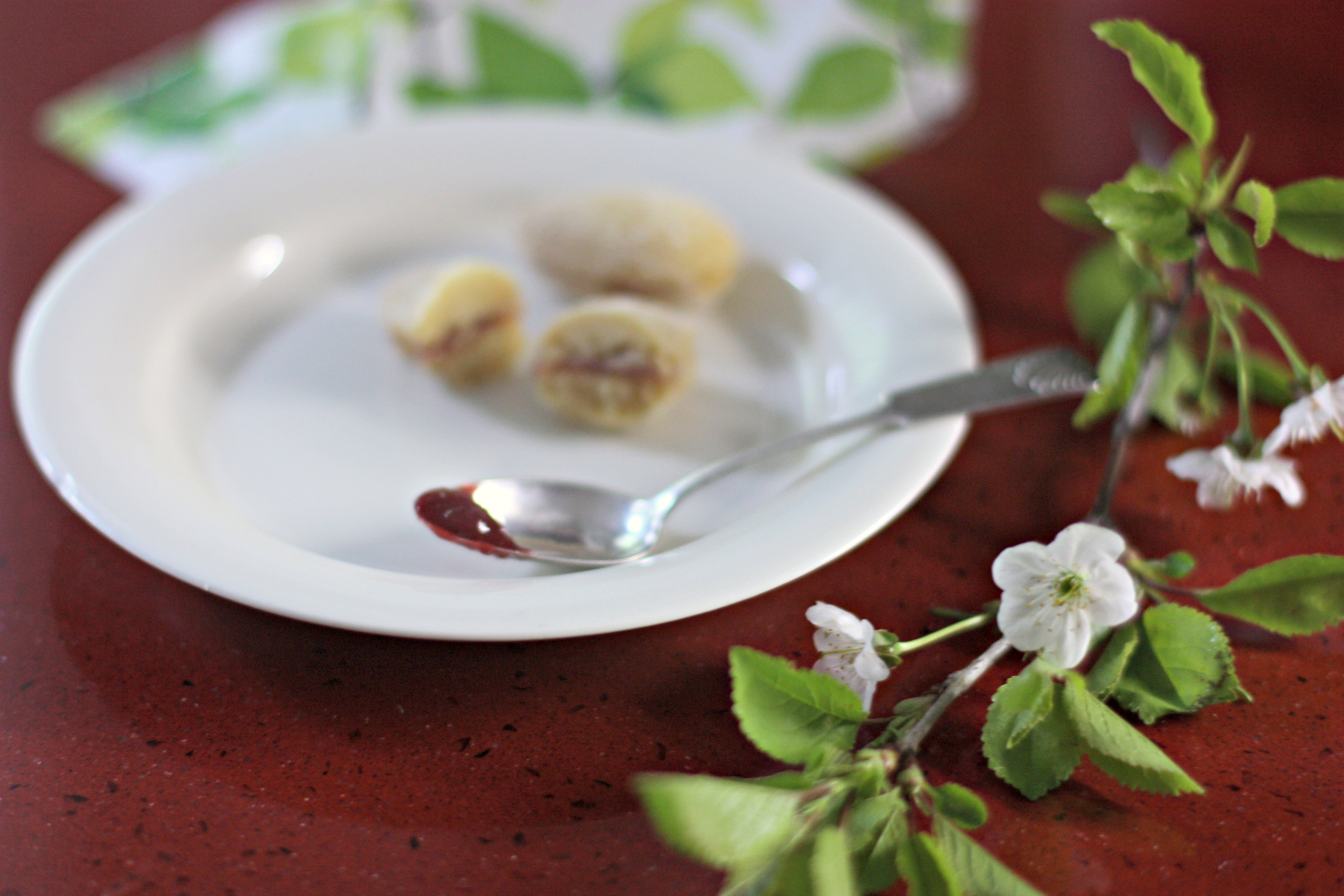
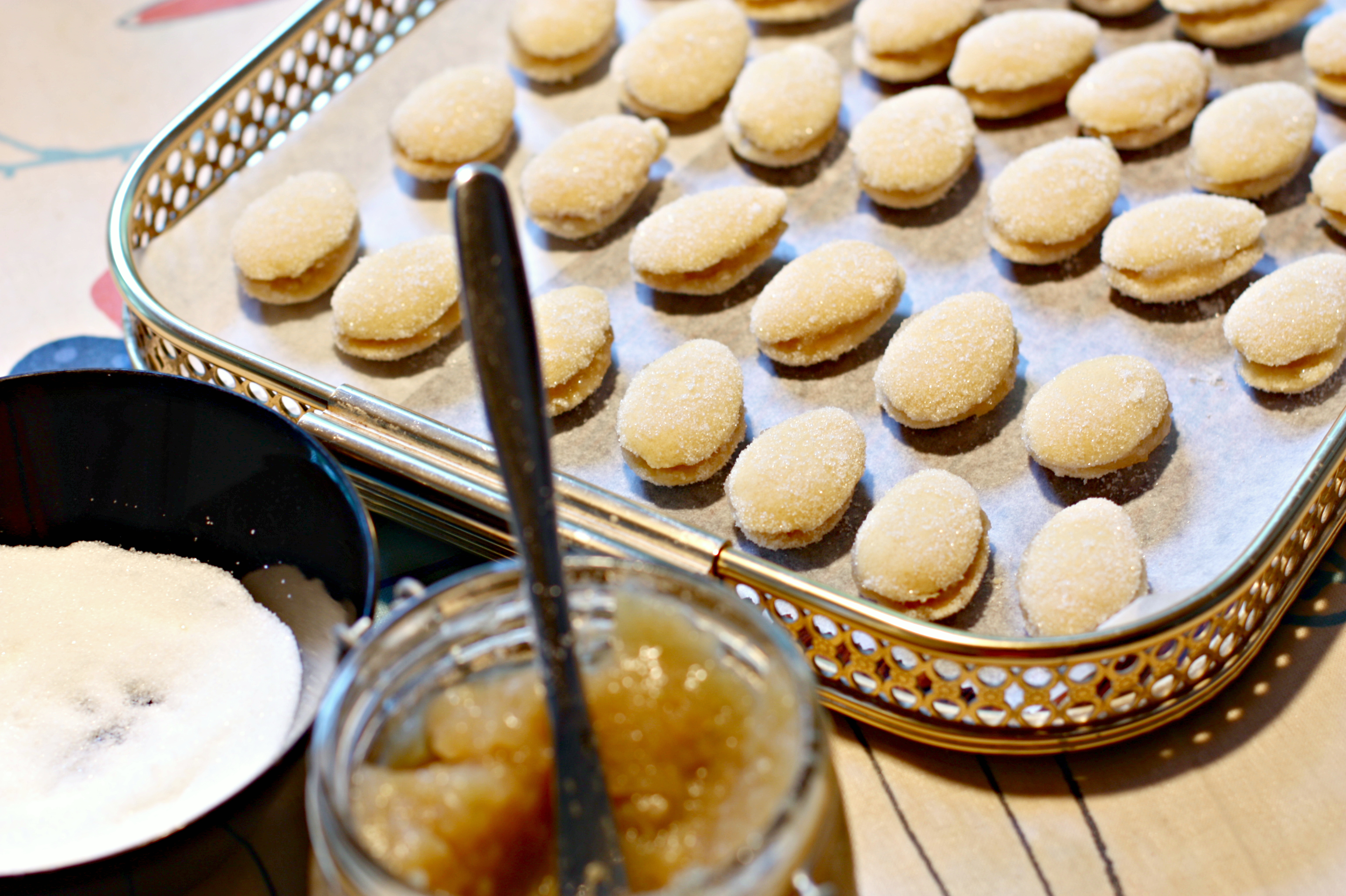
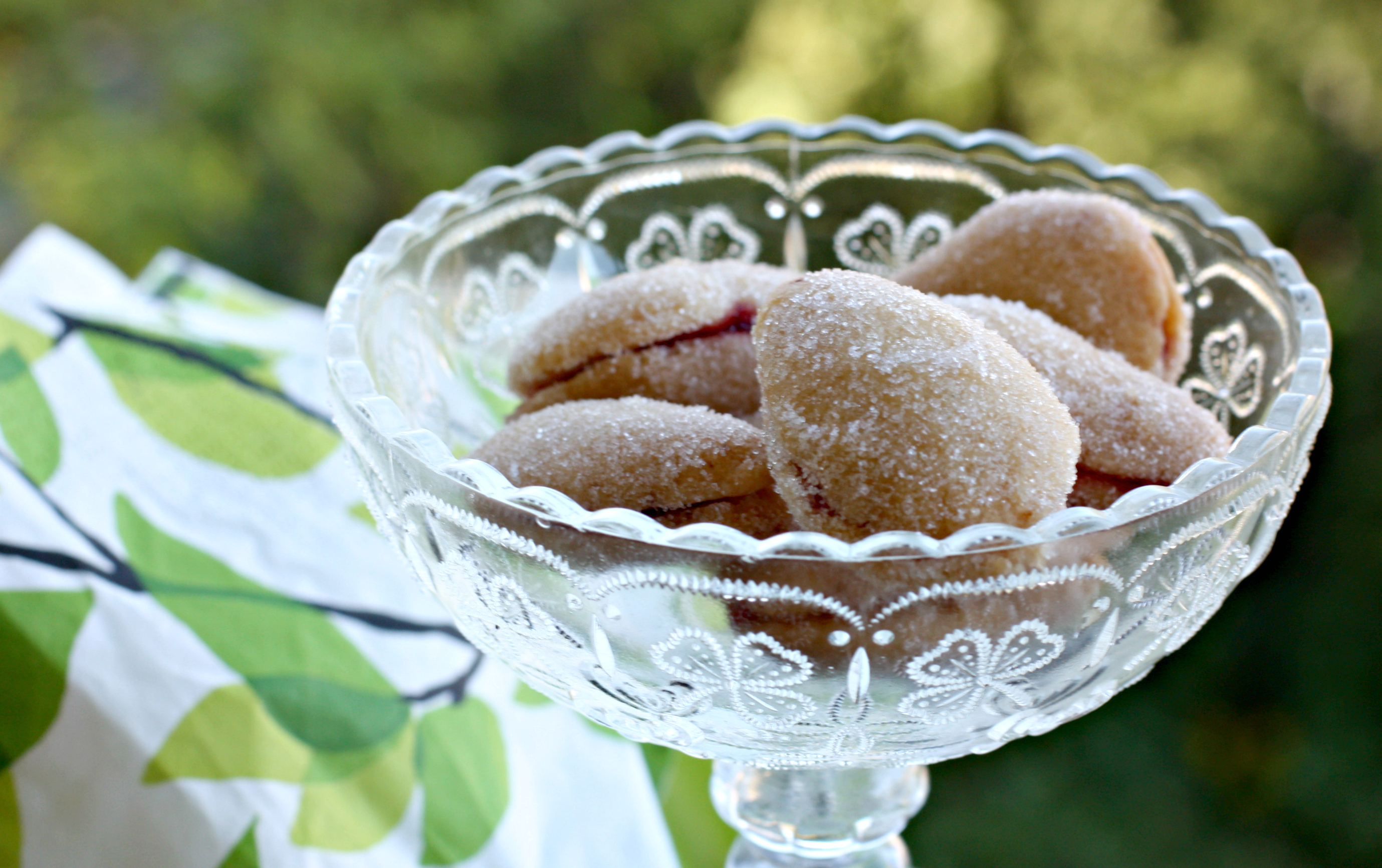
And celebrations and parties usually include traditional, festive recipes. Here is one of them. If you were a little nonplussed by the title, that is the name I and hubby coined today to give you an idea of what to expect. Online, I have seen people call these ‘Finnish spoon biscuits’ or ‘Finnish teaspoon cookies’, which I chose to reject for the simple reason that, to me, these are not biscuits nor cookies. The pastry definitely has the taste and consistency of British shortbread but the rest is very Finnish. To begin with, the bites are sandwiched, with some jam or marmalade in between.

But let me explain about the spoon. Many Finnish families have their own heirloom silver teaspoon for this particular purpose. It is exactly the right size, shape and depth – all essential requirements of the right spoon. It should be a small oval-shaped teaspoon, slightly pointed at one end, and not too shallow. Those who haven’t got one passed down the generations, might go to a flea market to look for one. I always go to my sister-in-law to borrow her ideal family teaspoon. The prettier the spoon, the lovelier, I would say, although, naturally, it won’t make any difference to the taste in the end! To make the bites, the pastry is pressed into the spoon to get the right shape – hence the name. In Finnish it is ‘lusikkaleipä’, which literally translates as ‘spoon bread’. A bit misleading, I know. You see, in Finnish ‘a biscuit’ is called ‘pikkuleipä’, which means ‘small bread’. Aren’t languages just great!

My sister-in-law's family spoon is simply perfect

My sister-in-law’s family spoon is simply perfect

These bites are usually baked for extra special occasions, at least in my family. They are proudly and lovingly prepared, usually by an older lady in the family. My mother baked them for my wedding, I baked them for my daughter’s school graduation party, and my sister-in-law told me that she had just baked them for her daughter’s engagement party. The rare occasions you get to taste them make them a luxurious treat that is truly appreciated. I also think the bites look very cute, like tiny sugar-coated eggs, and add a nice touch to any coffee table spread.

IMG_4856

INGREDIENTS (for c. 35 sandwiched bites)

  • 200 g butter (unsalted if you like, but works with ordinary, too)
  • 2 dl (200 ml) caster sugar
  • 4 dl (400 ml) all-purpose wheat flour
  • 1 tsp baking powder or bicarbonate of soda
  • 2 tsp vanilla sugar

FOR THE FILLING

  • jam or marmalade (firm enough, not too runny) – the most traditional ones used are apple (my favourite) or raspberry, but feel free to experiment with any you desire
  • + fine sugar for coating

Collage2

THIS IS WHAT YOU DO

  • melt the butter in a thick-bottom saucepan till it starts bubbling
  • let it bubbly on medium heat till it gets nice nutty brown (make sure you don’t burn it!)
  • pour into a bowl
  • add the sugar and let the mixture cool down
  • in another bowl mix the flour, baking powder and vanilla
  • add the dry ingredients to the cooled down butter mixture
  • press some pastry into the teaspoon to form the halves of the bites
  • put the halves onto a baking tray, which has been lined with grease-proof paper (make sure you make an even number of the halves!)
  • bake in 175° Celsius for c. 12 minutes (till just lightly brown)
  • let the halves cool down
  • spread a thin layer of jam/marmalade on one half, and press another one on top (do this very gently as the pastry is quite crumbly)
  • roll each bite in fine sugar to coat them

jul13 037

Very simple ingredients, simple procedures. Only the “spooning” is quite fiddly and time-consuming but I find it quite relaxing, tantamount to meditative. I never worry too much about making each bite exactly evenly shaped. Any rough edges, odd shapes or unevenly spread marmalade are just signs of home-baking, hand-made unique pieces. Much better and more precious than uniform factory or bakery products, in my opinion.

IMG_4871

With all that butter and sugar, obviously the bites are quite rich in calories. On the other hand, they are rather small, so I don’t think indulging in one will ruin anybody’s diet. The slightly browned butter adds a lovely, nutty, slightly bitter side taste that is totally irresistible. These Finnish delicacies really are worth trying as they literally melt in your mouth!

IMG_4877

 HAPPY CELEBRATIONS!


2 Comments

Hanami – adoration of cherry blossoms

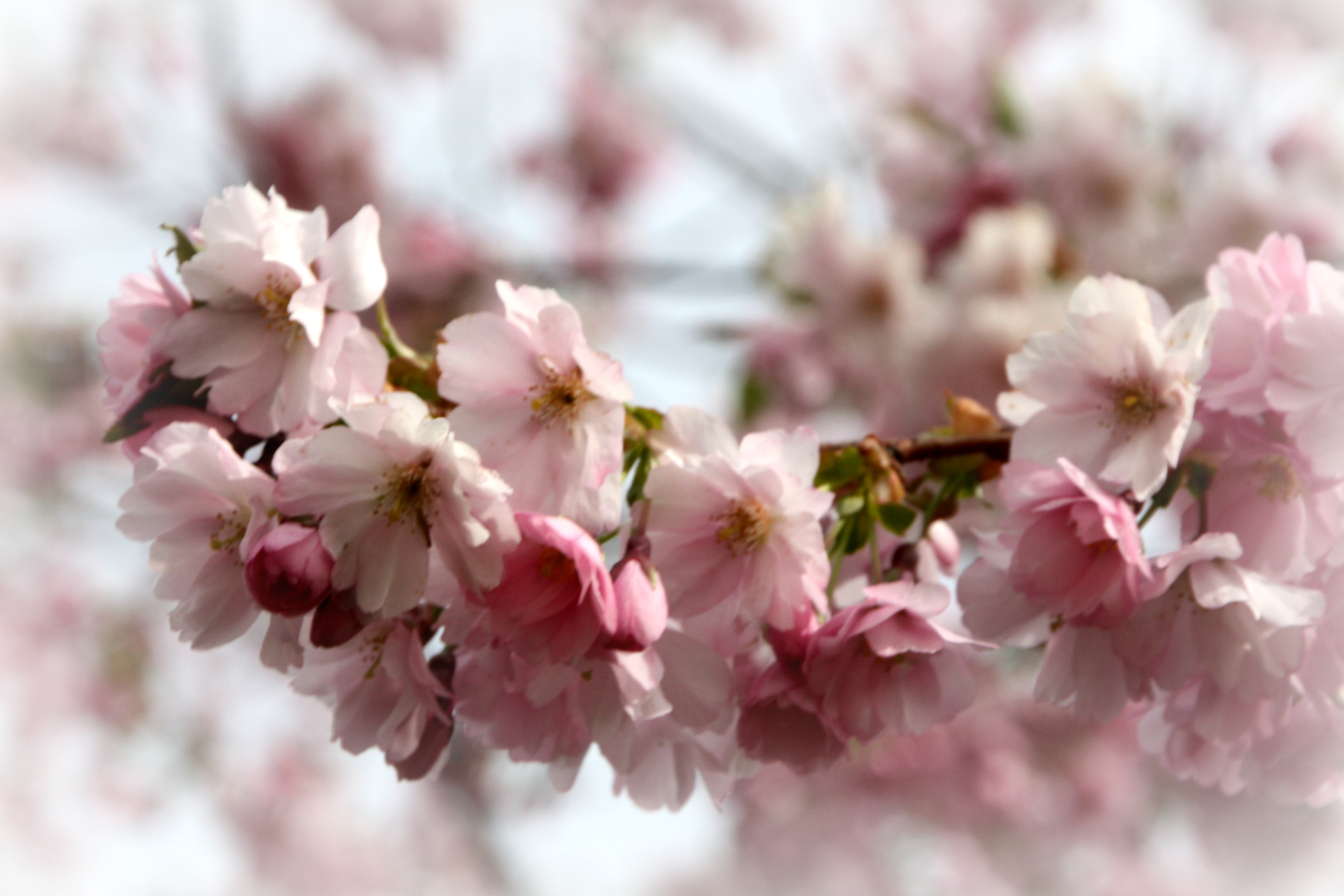
My first encounter with cherry blossoms was back in the mid-90s in Washington DC of all places. I was working as a Fulbright exchange teacher in Virginia for a year, only 30 minutes by metro from the capital. There are some 1,700 cherry trees around the Tidal Basin, donated as a sign of friendship by the mayor of Tokyo in the early 20th century. They offer a spectacular display of beauty in spring. I remember going there several times, to admire the first small pinkish blooms, through to the peak time and all the way to the end of the fragile petals falling on the ground, white as if it was snowing. At the weekend, we also saw a lot of Asian, and other people enjoying picnics under the blooming trees.

Ever since then, cherry blossoms have held a special place in my memory and heart. They are an annual reminder of the fleeting nature of life. So breathtakingly beautiful, but so short-lived at the same time! Recently, I have been more than pleased to see that some cherry trees have been planted along the riverside, and elsewhere, here in my hometown of Turku in Finland. This spring I have been cycling around with my camera to capture some of this floral splendour. It’s good for your soul to just sit or stand underneath a canopy of blooming trees, taking in the subtle colours of the petals, which quiver helplessly in the slightest breeze. So fragile that you feel as if you need to protect the tiny blossoms with your hands.

IMG_4335 IMG_4384 IMG_4417

One Sunday, I happened to be cycling along the river, and came across some cherry trees that I had never even noticed before. The blossoms were already coming to the end of their time, and had turned gorgeously white. They made me think of a full, lacy wedding dress – what a lovely thought!

IMG_4708IMG_4679

My project for next year is to start early enough, probably towards the end of April, and go round all the different trees I now know of, and enjoy the whole, swift blooming cycle. Unfortunately, our town doesn’t enlighten us of the different species of cherries they have planted. So, finding that out will be part of this project, too. ‘Mindfulness’ is one of the new fads here, and I feel enjoying the nature around us is the best form of mindfulness you can engage in – and it’s all free!

HANAMI FESTIVAL IN HELSINKI

I was lucky to notice an ad for a cherry blossom festival in Helsinki somewhere in my social media feed. It falling on a weekday religious holiday, made me convince hubby that we needed to go. It was actually the 8th time this festival was organised in the suburb of Roihuvuori in Helsinki, where over 200 cherry trees have been planted along a hill in a park. It was interesting to find out on a website that just as in Washington DC, these trees, too, are thanks to donations, this time by Japanese nationals residing here in Finland.

According to Wikipedia, HANAMI, or “flower viewing” means:

the Japanese traditional custom of enjoying the transient beauty of flowers, flowers (“hana”) in this case almost always referring to those of the cherry (“sakura”) or, less frequently, plum (“ume”) trees

It was a windy day, and a bit on the cool side. We even had a hail storm pour over us in the afternoon! But the weather didn’t prevent thousands of people from having a good time underneath the trees. Arriving by train, after a two-hour journey, we were there early, and managed to see the trees better than later on when all the participants were milling around and setting up their picnic spots.

collagecrowds2 04IMG_4573 07

I was especially pleased to see people of all ages taking part in the festival. Too often the Finnish custom is to separate the generations, each to their own specific activities. Lots of young families came with their babies, toddlers and pre-teens, many of whom wore creative fancy dresses for the occasion.

collagekids

The cosplay and anime crowd were there, too, with the most elaborate costumes. It was all quite delightfully unexpected for us but, of course, so much part of Japanese culture. Made me remember our trip to Japan, and a visit to Harajuku district in Tokyo where imaginative teens gathered to show off their sometimes quite outrageous fashions and styles.

collagepuvut

Initially, I had a very stereotypical expectation of the festival: a sophisticated, serene, almost solemn occasion, with possibly some faint, traditional Japanese music in the background, and people staring at the blossoming trees in quiet awe and adoration. Couldn’t have been more wrong! Little did I know, that people would bring boom boxes and other music devices, and play really loud rock and pop. What’s more, there were also music and Japanese martial arts performances on a stage, which added to the noise. Well, why not! Everybody to their own, and possibly this is the way ‘hanami’ is celebrated in Japan.

Definitely an occasion to mark in our diaries for next year. It was refreshingly different for Finland. Firstly, so crowded, and such a diverse and colourful group as well, with happy faces all around. Secondly, the joyful activity all through the day, Japanese food being cooked and sold in stalls, all the fascinating shows and performances. Thirdly, meeting friends for a chat and picnic on the lawn. And last but not least, the feeling of wonder, magic and fairy tale,  thanks to wonderful creatures such as this spring butterfly, for example.

PicMonkey Collage

The message of the cherry blossoms for me was ‘carpe diem’. Seize the day, and ‘gather ye rosebuds while ye may’ as it’s all too soon over.

IMG_4474a


Leave a comment

Want some cake in Turku, Finland?

Gaggui (Humalistonkatu 15, www.gaggui.com)

Kahvila1

Many of my female friends had been praising this new café for some time but it was reading the story behind it that finally got me to give it a try. Two identical twins, one a biologist, the other one an artist, joined forces to create this café, and change their careers at the same time. A brave move but apparently successful! It all started as one of the sisters wanted to create the perfect cake for her wedding. After lots of experiments, she had accumulated an interesting collection of different recipes, which the two of them then sold on one of the so-called “Restaurant days”. The cakes of these two sisters turned out to be so popular that they then ventured into business together.

IMG_2468b

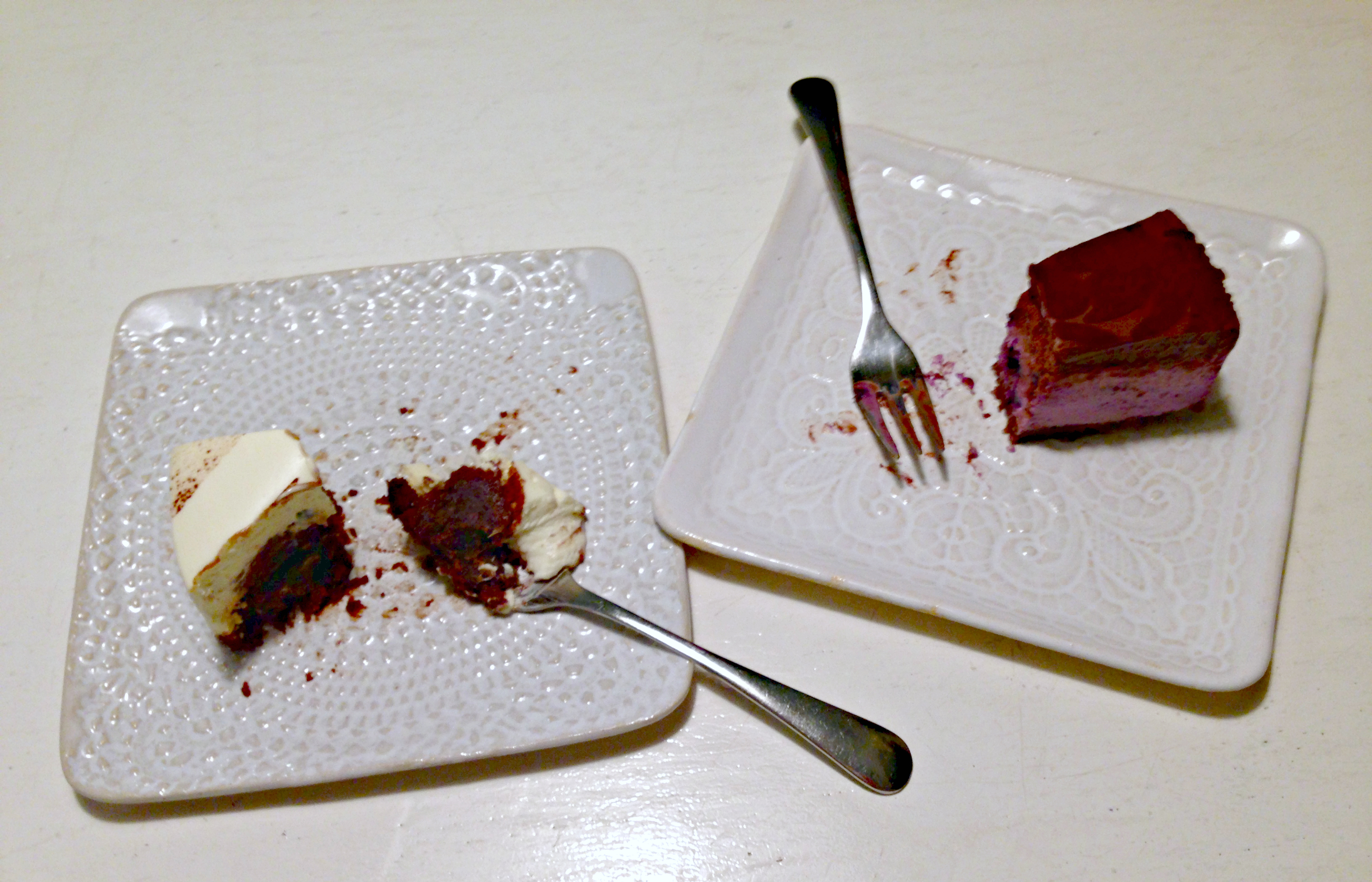
What I really like about this small café is that it’s really a local Turku place through and through. Their coffee is rosted locally, and a small tea shop up the road provides their teas. What’s more, they use our local dialect in all their signs. Even the name of the place “Gaggui” is a Turku variation of ‘kakkuja’ (‘cakes’). And cakes are definitely the speciality here, one more decadent than the other! Needless to say, all the cakes are their own original recipes and creations. How does “heaven on örth” (‘heaven on earth’ written in Finnish phonetics) sound to you? I can assure you, the cake really lives up to its name!

Kahvila5

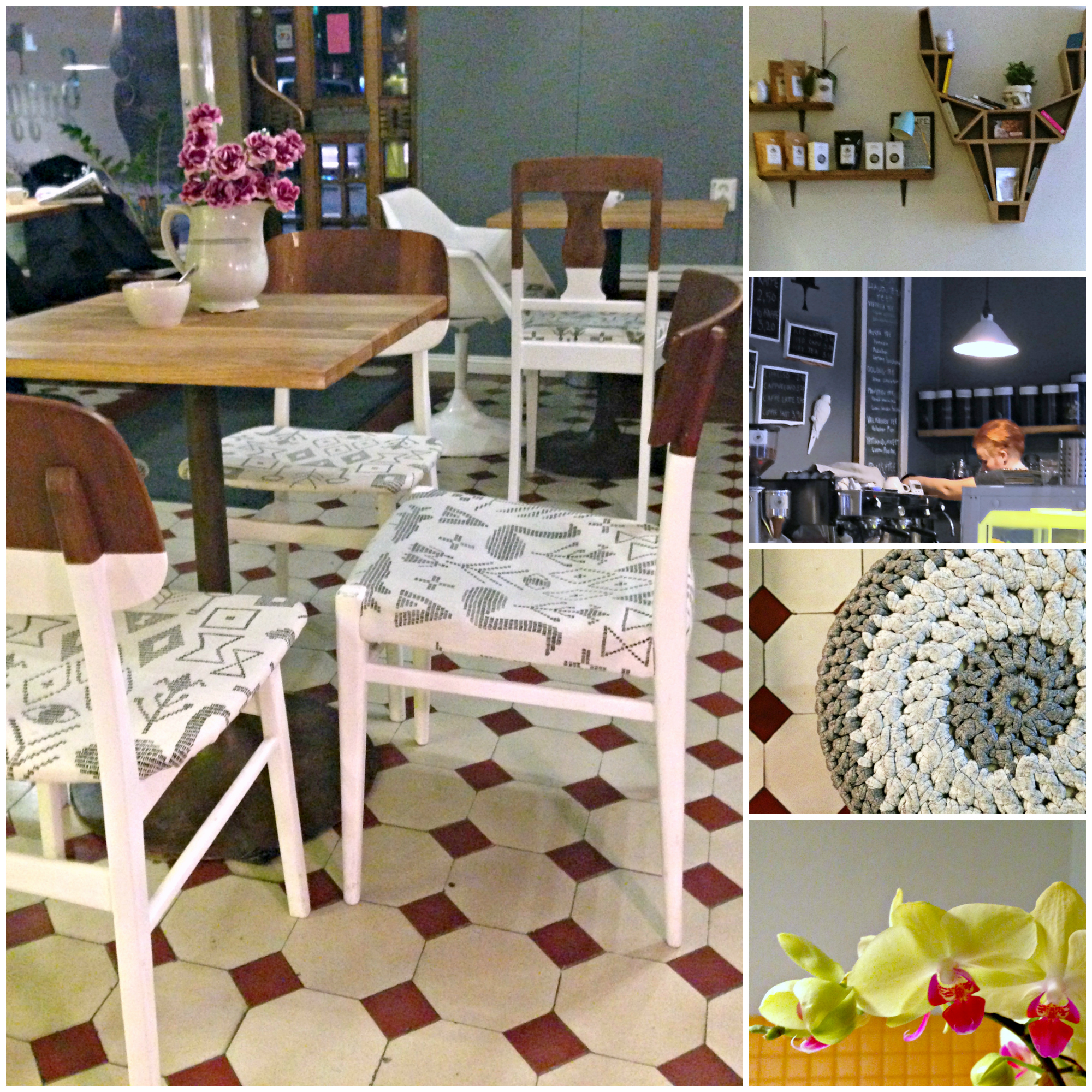
This café is small and intimate, basically just one room. The decor is quirky, with nice little touches of originality, even in the restroom. If you visit around midday on a weekday, the place tends to be full of groups of mothers with their kids, and even dogs. Don’t get me wrong, I am all for inclusion, and everybody’s right to go out to socialise. But if you are not accustomed to the Scandinavian lifestyle of public breastfeeding, and toddlers running around screaming, maybe you’d want to choose a time later in the afternoon or early evening to enjoy your coffee and cakes.

Kahvila2Kahvila3


Leave a comment

Ladies’ summer cooler

Come May, and  my annual chase for a refreshing, bubbly ladies’ drink for summer garden parties starts. There is nothing like a cold, sparkling mix to keep sipping while nattering with girlfriends in the garden on a warm summer’s night. This year I was lucky to find an idea in a magazine for our 1st of May guests. May 1 is a special carnival type celebration in Finland, and the unofficial opening of the summer season – come rain or shine. Champagne, cava, prosecco and all other varieties of sparking wines are a must at this occasion.

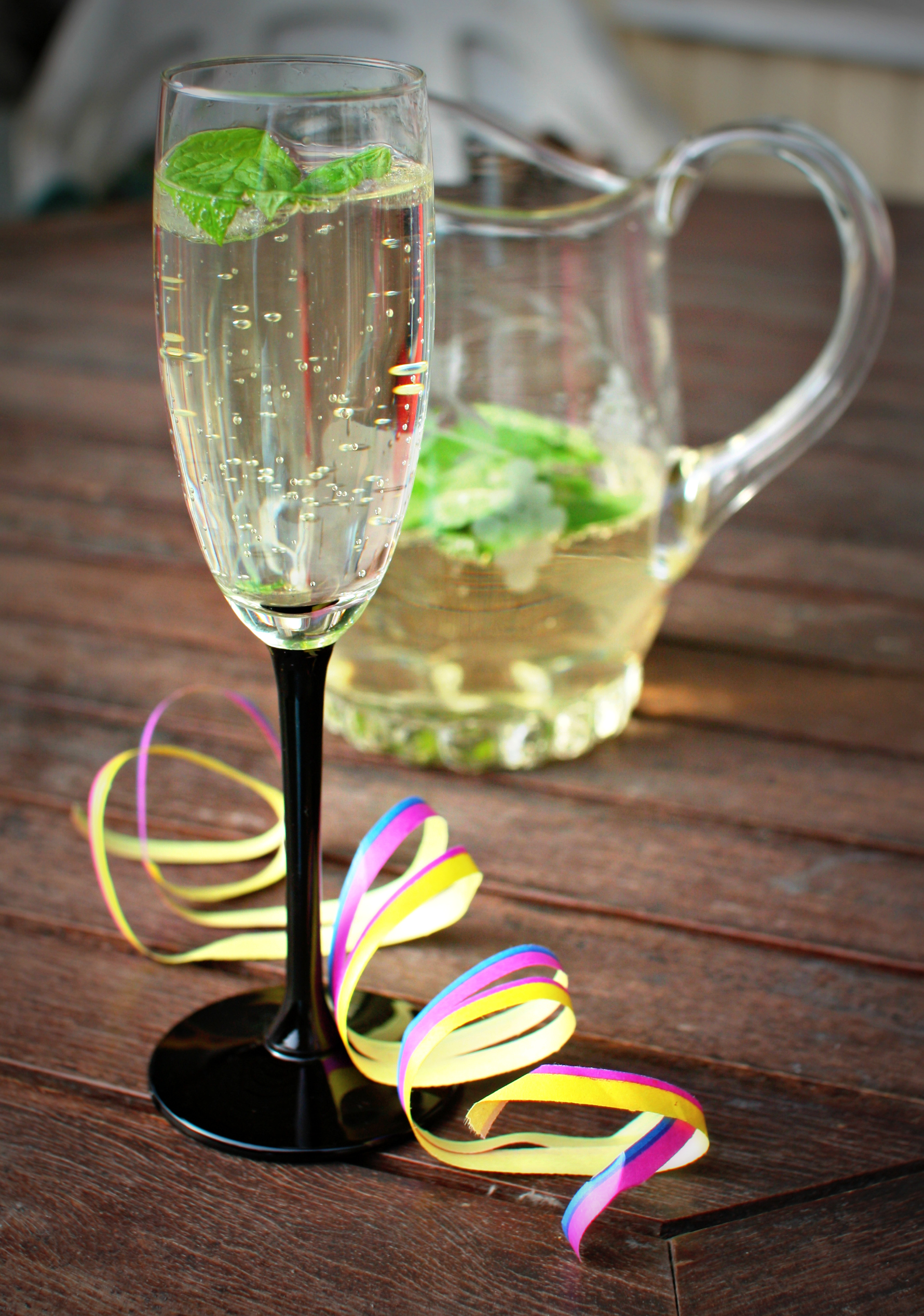
The following recipe is not too sweet, it produces beautiful bubbles in the glass and is simply so deliciously delightful that I’m sure I will be mixing loads of jugfuls this summer.

drink1

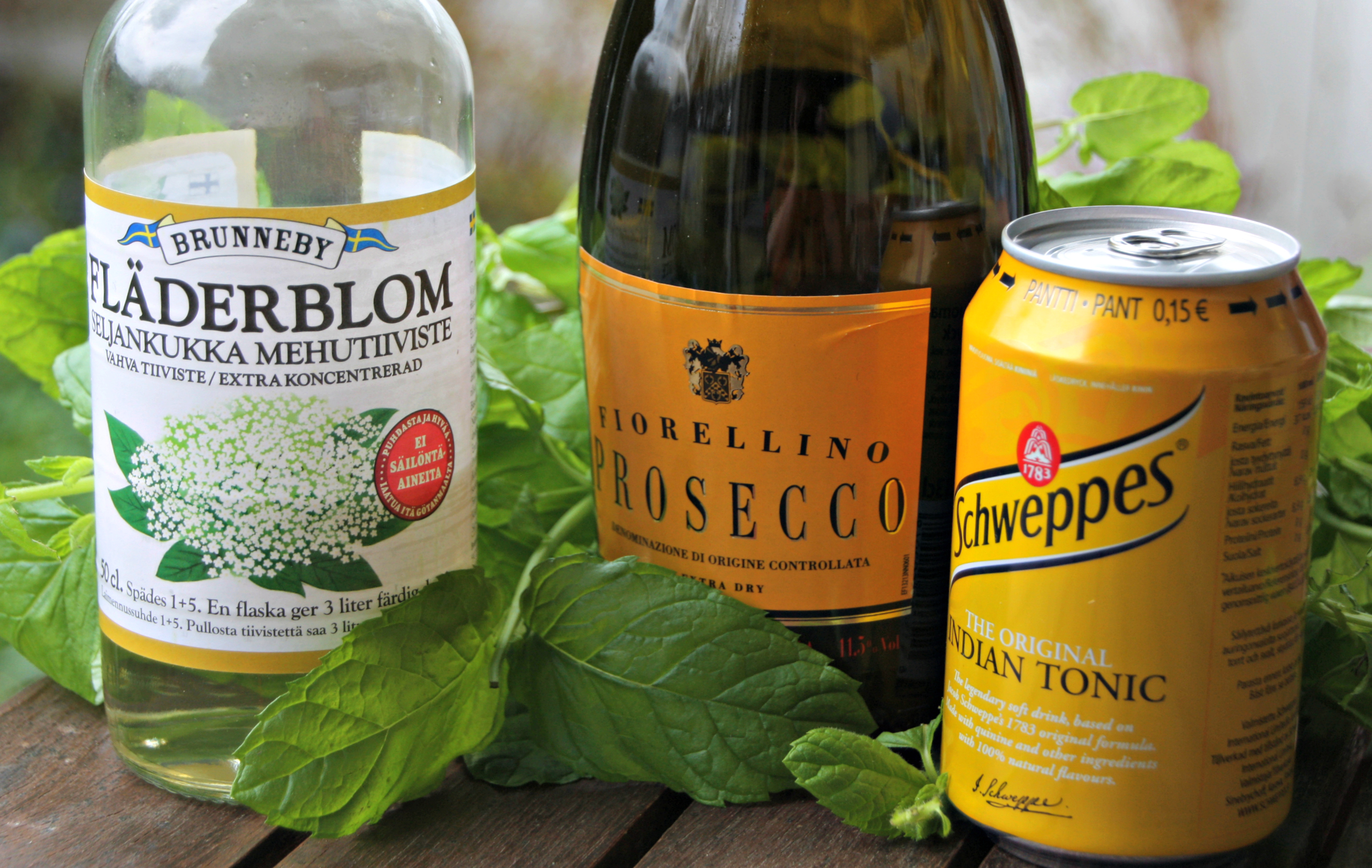
INGREDIENTS (for a jug of 1 liter)

  • 2 1/2 dl elderflower juice concentrate (very cold)
  • 5 dl Italian prosecco (very cold)
  • 2 1/2 dl tonic water (very cold)
  • lots of ice cubes
  • mint leaves

drink3

Simply mix the liquids in a jug filled with ice cubes. Add the mint leaves, and leave some to garnish each glass. What could be easier and more delicious than this? And even the men enjoyed it!

IMG_4232

CHIN CHIN!


Leave a comment

The plight of Arctic minority peoples

During my Easter trip to northern Norway, I learned a lot about minority peoples here in the Nordic countries, especially the oppressed history of the Sami people. The Sami are an indigenous people, in fact the only one in the whole of Europe, living in Norway, the north of Sweden and Finland, and the Kola peninsula in Russia. There are about 100,000 of them, speaking several different varieties of the Sami languages. The overwhelming majority live in Norway. I must admit that I had quite a stereotypical, touristy picture of them. You know, people wearing their colourful traditional costumes, herding reindeer in the wilderness of Arctic Lapland, just like the pictures on this Norwegian tourism website. Only Santa Claus is missing to complete the picture!

sami1

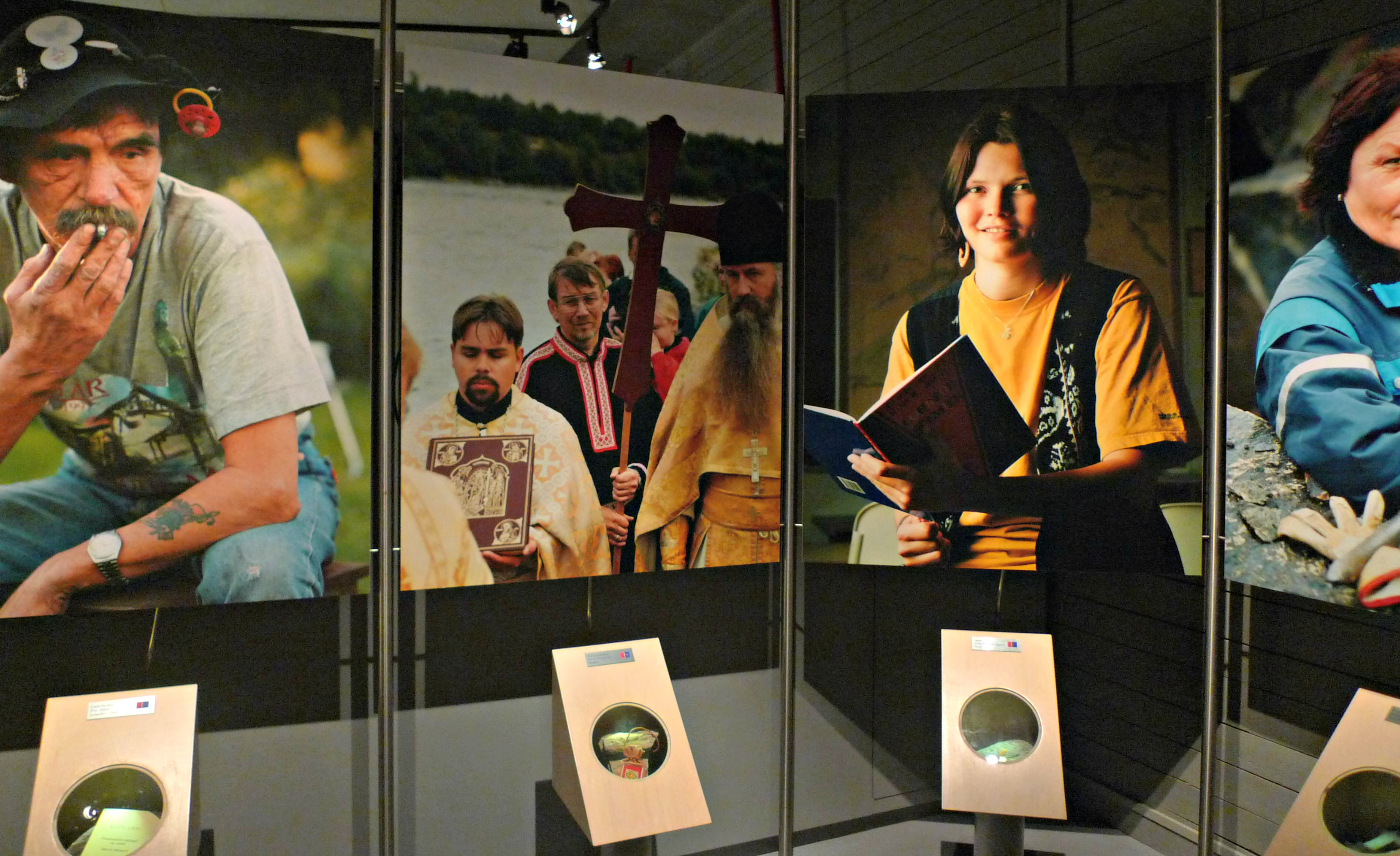
Yet, a visit to the Sami ethnographic exhibition at the Museum in Tromsø, and listening to the many stories and insights of our hosts, opened my eyes. After decades, and centuries of oppression, and shame about being different, a minority in a country, the Sami are gradually getting recognition and rights to their language. In the past, Sami children in Norway, for instance, used to be sent to monolingual Norwegian schools to learn that language, being mocked and discriminated against in the process. It didn’t help that most of them were also members of a very strict religious sect that forbade them a lot of the activities that other Norwegian children enjoyed. Luckily, things are gradually changing, and about time before yet another small minority language disappears from this earth. Sadly, some varieties of Sami have already become extinct.

sami3

In Norway, it wasn’t until the 1990s that bilingual road signs (Sami and Norwegian) were introduced in the north. But as you can see from this one above, displayed at the museum, not everybody was happy about this development. During the night, Norwegian opposers went ahead and shot at the signs long enough to make the Sami name undecipherable! And this went on and on, as soon as the authorities replaced the destroyed signs. The hatred and narrow-mindedness of some people!

My limited idea of the Sami was shattered at the museum, seeing huge photos of all the different people with Sami roots. Of course, they are all their own individual selves even if there are still some of the traditional reindeer herders left, too. I was deeply touched by the stories of people who had totally buried their Sami ancestry to protect themselves and be accepted in Norwegian society, only to find out later in life, sometimes through serendipitous coincidences that they were actually Sami.

sami2

I must say I felt even worse when I learned about the Kven minority in Norway. I hadn’t even known about them! And they are my compatriots, descendants of Finns who moved to Norway back in the 19th century. Their fate has been very similar to that of the Sami, or even slightly more difficult as they didn’t have the special indigenous status. Many of them totally denied their Finnishness, and did their utmost to become Norwegian and not stand out from the crowd. These days, though, they are becoming more active, having their own little societies and meetings, and claiming their rights together with other minority groups. It is a triumph in the north that you can now see even trilingual road signs – Norwegian, Sami and Finnish!

sami5

How has the status of these minorities improved then? In Norway, the Sami have their own Parliament and are recognised as a minority group with their own language. Here in Finland, Sami children finally have the right to education in their mother tongue. Since 1986, the Sami even have their own flag, which I saw proudly flying on the poles together with the Norwegian national flag in Tromsø. Still, there is a lot to be done, not least about the attitudes of the majority.

samiflag

How many tragedies and sad fates have these people suffered over the years! And similar injustice is still rampant all round the world. ‘Different’ equals ‘worse’ and ‘a threat’ – let’s suppress it. When in our country, be like us, behave like us, become one of us, at any cost! It’s frightening, in the wake of yet another general election here in Finland, how the extremist anti-immigration parties and ideas gain ground. Will humankind ever learn from history?

During this highly enlightening trip, I was also introduced to Mari Boine, a Sami singer and musician, who has been promoting the Sami rights, culture and language through her music ever since the 60s. Here is a song by her, where the rugged and challenging arctic circumstances and the Sami issue are ever present. The music is magical and haunting. The northern dimension, with all these ethnic tensions, will certainly be haunting me for a long time.

The lips of the silenced people burst out in speech
The stream of words once again were flowing
Over the frozen riverbanks when we finally came together
My dearest son of the wind

(Taken from Lyricstranslate)